About This Build Agentic AI Apps with Claude Code & Codex Course
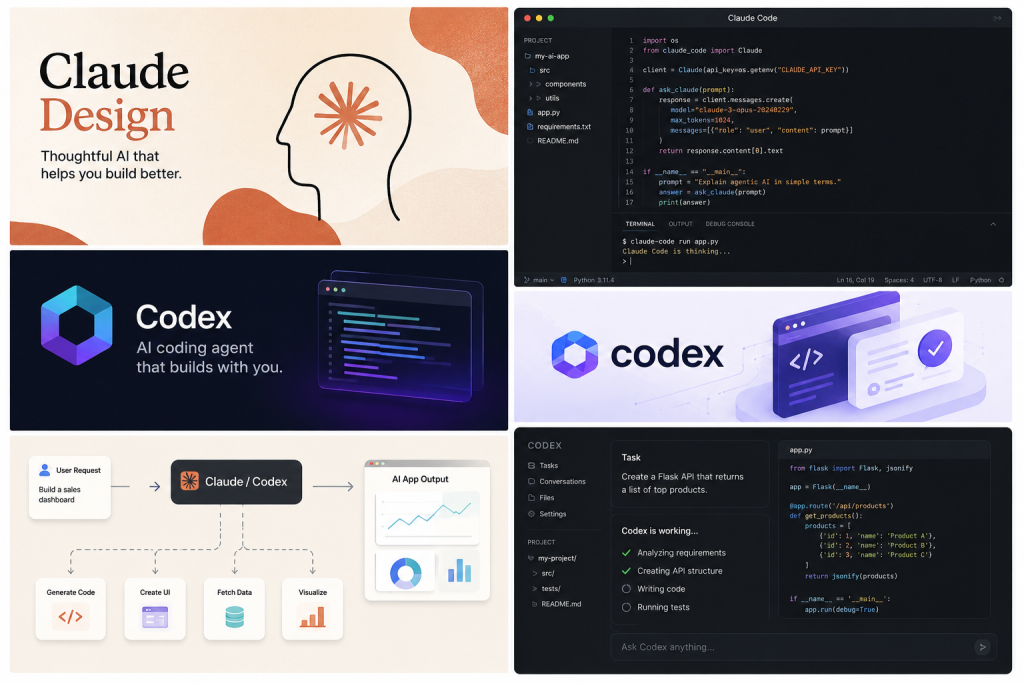
Codex and Claude Code Course for Agentic AI coding
Artificial Intelligence is rapidly transforming the way applications are designed, developed, and deployed. Modern AI coding assistants such as Claude Code and Codex now enable users to generate code, understand entire code bases, read the documentation, or even build some from scratch, create intelligent assistants, and accelerate software development using natural language instructions (called prompts).
This highly practical and beginner-friendly course introduces learners to the fundamentals of Agentic AI application development using Claude Code and Codex. Participants will explore how AI-powered coding tools can assist in generating applications, improving productivity, creating new features, websites, and test their ideas with the help of Claude Code and Codex.
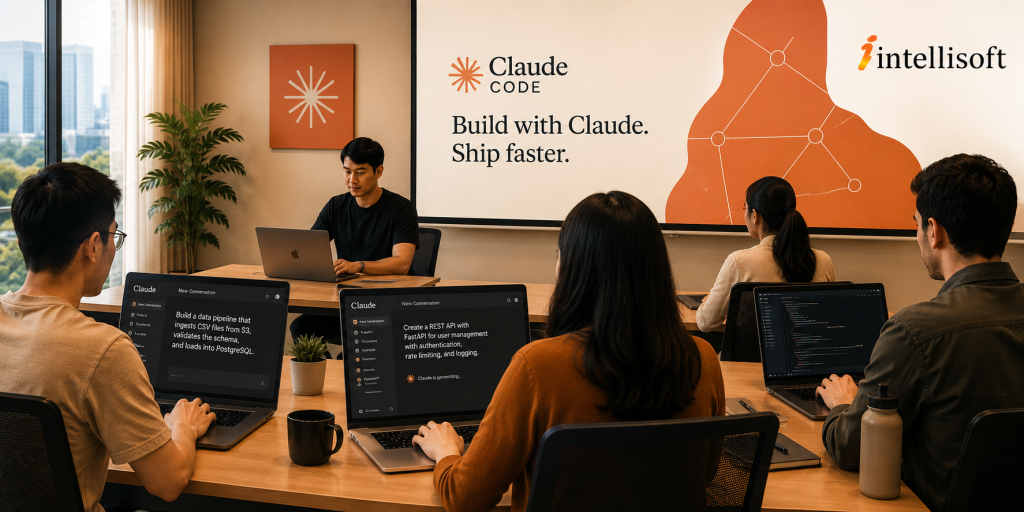
Claude Code Training in Singapore at Intellisoft. Master Claude Code & Codex with WSQ and SkillsFuture Grants
The course covers key concepts including generative AI, agentic AI, prompt engineering, AI-assisted coding, workflow automation, and responsible AI practices. Learners will also gain hands-on exposure to creating simple AI-powered applications, generating and refining code, building AI workflows, and evaluating AI-generated outputs.
Designed for both technical and non-technical professionals, this course focuses on practical use cases and real-world demonstrations to help learners confidently begin their journey into AI-powered application development and automation.
Codex Course For Agentic AI Application Development in Singapore with SkillsFuture & WSQ Grants
SkillsFuture for Build Agentic AI Apps with Claude Code & Codex course: Individual Singaporeans aged 25 and above can use their Skills Future Credit (Opening Credit) for this Agentic AI App Dev using Claude course training class. SkillsFuture Credit (Mid-Career) CANNOT be used for this course.
NTUC UTAP GRANT IS available
Bring Your Own Device to Class: You must bring your own Windows or Mac laptop with the required admin access to install new software on your device. A paid subscription to Claude Code and Codex will be required to complete the exercises in this workshop. You can use API credits or the paid Claude Pro or Max plan, and a paid ChatGPT Plus or higher plan. The trainer will guide you in class on the type of plans and software to subscribe and install.
Practical Labs to better understand and use Claude Code and Codex Agents
This is a practical, hands-on workshop on using Claude Code & Codex for Agentic AI Coding. There will be several short & practical Lab Sessions around the topics listed below. These labs will be customized and contextualized based on class dynamics, trainee interest and trainer decisions.
Lab 1
Install Claude Code
Install Codex
Configure API Keys
Create first project
Lab 2
Memory Management
CLAUDE.md
Project Instructions
Context Engineering
Lab 3
Commands
Skills
Reusable Workflows
Lab 4
MCP Setup
File System Access
GitHub Integration
External Tool Access
Lab 5
Build Agents
Build Subagents
Multi-Agent Collaboration
Lab 6
Playwright Browser Automation
Testing and Validation
Lab 7
Debugging and Refactoring
Model Comparison (Claude vs OpenAI)
Lab 8
Deploy a Complete Agentic AI Application
Learn to turn natural language instructions into AI-powered apps, workflows, assistants and practical coding solutions.
🖥️
Learn By Doing
Hands-on exercises on real Singapore business datasets from the very first module.
👥
Small Class Sizes
10–25 participants for personal attention.
📧
Post-Training Support
We provide email support for our participants. Simply email us your questions.
What You'll Walk Away With
🤖Learn Claude Code and Codex fundamentals through beginner-friendly, hands-on AI app development exercises.
💻Create simple AI-powered applications, assistants and productivity tools using natural language prompts.
⚙️Apply prompt engineering techniques to generate, refine, test and troubleshoot AI-generated code.
🛡️Understand responsible AI practices, hallucination risks, privacy concerns and human validation methods.
What You Will Learn
What You Will Learn in Build Agentic AI Apps with Claude Code & Codex
🤖
Build AI-Powered Applications
Create simple applications and workflows using Claude Code, Codex and natural language instructions.
🧠
Apply Agentic AI Concepts
Use generative AI, agentic AI and LLM concepts in practical development scenarios.
✍️
Design Effective Coding Prompts
Structure prompts that guide AI tools to generate accurate, useful and relevant code.
🔍
Analyse AI-Generated Outputs
Evaluate AI results for accuracy, relevance, reliability, limitations and improvement opportunities.
🛠️
Develop AI Assistants And Tools
Create beginner-friendly chatbots, assistants and productivity tools for business use cases.
🛡️
Implement Responsible AI Practices
Apply privacy, governance, validation and ethical practices when using AI-generated code.
By the end of this course, learners will be able to:
Understand Generative AI, Agentic AI and AI coding assistants.
Use Claude Code and Codex to support AI-powered application development.
Create simple AI-powered applications using natural language prompts.
Generate, review and refine AI-generated code.
Build AI assistants, chatbots and productivity tools.
Apply prompt engineering techniques for better AI outputs,
Evaluate AI-generated content and code for accuracy, quality, and reliability,
Understand the limitations, risks, and ethical considerations associated with AI-generated outputs,
Identify practical workplace and business use cases for Agentic AI technologies
Is This For You?
Who Should Attend Build Agentic AI Apps with Claude Code & Codex?
💼
Business Professionals
You want to use AI tools to build simple solutions without becoming a full-time programmer.
📊
Data Analysts
You need faster ways to quickly analyse data, build tools and reduce repetitive manual work.
🖥️
IT Professionals
You want to understand how Claude Code and Codex can accelerate development and support automation.
🚀
Innovation Managers
You need practical AI application ideas that can support digital transformation initiatives.
This course is suitable for:
Business professionals exploring AI tools and automation in coding and web or app development
Executives and managers interested in building apps without writing a single line of code
Data analysts and power users to analyze huge amounts of data in Excel, Text files, or other formats quickly.
IT professionals and system administrators to accelerate the product development and enhancement process
Beginner developers and aspiring AI developers to master the AI Tools that are fast evolving
Process improvement and operations teams who do not have to rely on expensive and slow IT work.
Innovation and digital transformation teams to speed up the development of new product features and accelerate go to market strategies to implementation.
Educators, trainers, and consultants who want to leverage on Claude Code & Codex for designing next gen cutting edge code without actually coding!
Anyone interested in learning how AI coding assistants can help build intelligent applications and websites, analyze data and do much more.
Before You Attend
Pre-Requisites for Build Agentic AI Apps with Claude Code & Codex
Basic familiarity with Microsoft 365 applications. An understanding of workflow concepts or basic automation tools is advantageous.
🏛️ WSQ funding up to 70%, plus SkillsFuture Credit, UTAP and SFEC support.
Curriculum
Build Agentic AI Apps with Claude Code & Codex: Course Outline & Curriculum
Module 1
Underlying Principles, Core Concepts and Theories Governing Generative AI
Introduction to Generative AI and Agentic AI
Understanding LLMs and AI coding assistants
Introduction to Claude Code and Codex
AI reasoning, workflows and automation concepts
Fundamentals of AI-powered app development
Module 2
Difference Between Generative and Discriminative Models
Generative vs discriminative AI models
AI chatbots vs AI agents
Single-agent and multi-agent systems
AI copilots and autonomous workflows
Comparing Claude, Codex, ChatGPT and Gemini
Module 3
Demonstrate the Use of AI in Diverse Applications
AI for coding, summarisation and automation
Building simple AI-powered applications
Creating AI workflows and assistants
Business use cases for Agentic AI
Hands-on AI app demonstrations
Module 1
Importance of Data Quality, Preprocessing, Model Pipeline and Model Training
Importance of data quality and context
Understanding prompts and model pipelines
Managing hallucinations and AI limitations
AI-assisted development workflows
Testing and refining AI-generated outputs
Module 2
Impact of Prompt Engineering on Model Outputs of Generative AI
Fundamentals of prompt engineering
Structuring effective prompts
Multi-step and chain-of-thought prompting
Prompt engineering for Claude Code and Codex
Generating and refining AI-generated code
Module 3
Apply Understanding of Generative AI Principles to Use Cases
Creating AI assistants and chatbots
Building simple AI productivity tools
Automating business workflows
AI-assisted coding and debugging
Beginner-friendly AI app exercises
Module 4
Analyse Generative AI Models’ Performance Metrics and Evaluate Prompt Variations
Evaluating AI-generated outputs
Measuring accuracy and relevance
Comparing prompt variations
Improving consistency and reliability
Validating AI-generated code and content
Module 1
Generative AI Model Workings, Training Data, Algorithms and Outputs
How AI models are trained
Data privacy and governance considerations
AI security and responsible AI usage
Risks of exposing confidential information
Module 2
Ethical Implications and Societal Impact of AI-Generated Content
Ethical use of AI-generated content
Human-AI collaboration
Workplace impact of AI adoption
Responsible AI implementation
Module 3
Analyze Limitations and Potential Biases in AI-Generated Content
Biases and hallucinations in AI systems
Risks of inaccurate AI-generated outputs
Human validation and review practices
Best practices for trustworthy AI usage
LU1: AI Fundamentals
T1: Underlying Principles, Core Concepts and Theories Governing Generative AI
Introduction to Generative AI and Agentic AI
Understanding LLMs and AI Coding Agents
How Claude Code and Codex work
AI reasoning, planning, tool use, and agentic workflows
Foundations of AI-assisted software development
T2: Difference Between Generative and Discriminative Models
Generative vs Discriminative AI Models
AI Chatbots vs Agentic Coding Assistants
Single-Agent vs Multi-Agent Architectures
Agents, Subagents, and Autonomous Workflows
Comparing Claude Code, Codex, ChatGPT, Gemini, and Copilot
T3: Demonstrate the Use of AI in Diverse Applications
Installing and configuring Claude Code and Codex
Creating and managing your first AI coding project
Using different AI models for coding tasks
Building a simple Agentic AI application
Real-world software development and automation use cases
LU2: Prompt Engineering for Agentic Coding
T1: Importance of Data Quality, Preprocessing, Model Pipeline and Model Training
Project context management and context engineering
CLAUDE.md, memory files, and project instructions
Context windows, token usage, and model limitations
Agentic development lifecycle: Plan → Build → Test → Deploy
Introduction to MCP (Model Context Protocol) and external tools
T2: Impact of Prompt Engineering on Model Outputs of Generative AI
Effective prompting for Claude Code and Codex
Task decomposition and planning prompts
Custom commands and reusable workflows
Skills, instruction files, and project templates
Prompt refinement for generating production-quality code
T3: Apply Understanding of Generative AI Principles to Use Cases
Building coding agents and subagents
AI-assisted code generation and refactoring
Documentation generation and code understanding
Browser automation and testing with Playwright
Hooks, automation triggers, and workflow orchestration
T4: Analyse Generative AI Models’ Performance Metrics and Evaluate the Influence of Prompt Variations
Evaluating AI-generated code quality
Debugging and troubleshooting AI-generated solutions
Comparing model outputs across Claude and OpenAI models
Measuring reliability, accuracy, and maintainability
Deploying and validating AI-built applications
LU3: Ethical Considerations
T1: Generative AI Model Workings, Including Training Data, Algorithms, and Outputs
How modern coding models are trained
Understanding reasoning models and coding models
Data privacy, secrets management, and secure development
MCP security considerations and tool permissions
Responsible use of AI-generated outputs
T2: Identify the Ethical Implications and Societal Impact of AI-Generated Content
Ethical use of AI-generated code
Human oversight and accountability
AI collaboration within software development teams
Impact of Agentic AI on software engineering roles
T3: Analyze Limitations and Potential Biases in AI-Generated Content
Hallucinations and incorrect code generation
Security vulnerabilities introduced by AI
Biases and limitations of AI coding systems
Human validation and review processes
Best practices for trustworthy Agentic AI development
Your Trainer
👤
Your Trainer
Vinai Prakash
MBAMicrosoft Certified Trainer35+ Years Experience
Vinai Prakash is a technology trainer, consultant, author, and the Founder of Intellisoft Systems. With 35+ years of experience in information technology, business analytics, automation, artificial intelligence, and digital transformation, he has trained over 45,000 professionals from government agencies, MNCs, financial, educational institutions, and SMEs across Singapore and the region.
Vinai specializes in helping organizations leverage data, automation, and emerging technologies to improve productivity, enhance decision-making, and accelerate business transformation.
He is the author of the Amazon bestselling book *Excel Crash Course* and has contributed articles on technology, business intelligence, and data analytics to The Straits Times and other leading business publications. His expertise spans Data Analytics with Excel and Power BI, SQL, Python, Microsoft Power Platform, Microsoft 365 Copilot, Agentic AI, Claude Code, OpenAI Codex, n8n Automation, Project Management, and Digital Productivity Solutions.
He is widely recognized for his ability to simplify complex technical concepts and translate them into practical, real-world solutions that participants can immediately apply in their work.
Trusted by professionals from 500+ organisations
Training Course Fees & Funding
Full course fee: S$1,200.00
(before GST & government funding)
TGS: TGS-2026062462
Foreigners & other pass holders: Government grants are not applicable. Full course fee of S$1,200.00 + 9% GST = S$1,308.00 applies. Contact us for more details.
* Terms & conditions apply. Funding subject to eligibility and approval by respective agencies. GST applies on full course fee before subsidy. Fee information is accurate as of Oct 2026.
Register
Register for Build Agentic AI Apps with Claude Code & Codex in Singapore
What Past Build Agentic AI Apps with Claude Code & Codex Participants Say
★★★★★
I enjoyed the step by step process to understand my code base with Claude Cowork and Codex. Then I was able to issue enhancement requests and see them get built within minutes. This is a must attend course for all people. Now everyone can create their own apps in no time.
J
Joyce Lim
Researcher, A*Star
★★★★★
OpenAI Codex can create complete apps and websites in a very short time. The key thing is the prompt. It is a huge time saver to build and improve existing code and troubleshoot issues that have been there for ages. Create multiple complete web pages from a simple mockup has freed up my time considerably. I did not even know how to code.
T
Tan Siew Hien
Financial Advisor, Financial Analyst
★★★★★
Trainer is knowledgeable & friendly. Notes provided is good. I picked up AI coding and app development easily, Relevance to real life applications, Clarity in explaining differences between various Vibe Coding Apps is great.
J
James McLeod
Hobbyist & YouTube Influencer
Common Questions
Frequently Asked Questions
What are the course fees and funding options? ▾
The full course fee is S$1,200 before GST and government funding. Eligible Singapore Citizens and PRs may receive up to 70% WSQ funding, reducing the payable amount to as low as S$468 including GST. SkillsFuture Credit, UTAP and SFEC may also be applicable, subject to eligibility.
How long is the Claude Code and Codex course? ▾
This is a 2-day instructor-led course. The program is designed to be practical and beginner-friendly, with guided demonstrations, hands-on exercises and real-world AI application examples.
Do I need coding experience before attending? ▾
No coding background is required. Basic digital literacy and familiarity with any coding language will be helpful, but not mandatory. The course introduces AI-assisted coding concepts step by step using Claude Code and Codex.
Will I receive a certificate after completion? ▾
Yes, participants will receive a WSQ certificate upon successful completion, subject to course and assessment requirements. This certificate is recognised in Singapore and supports professional upskilling in AI, automation and application development.
Where is the training conducted? ▾
The classroom training is conducted at Fortune Centre, 190 Middle Road, #10-08, Singapore 188979. Corporate runs may also be arranged for companies that want a dedicated class for their team. Online or customised delivery can be discussed based on training needs.
Who should attend this Agentic AI app development course? ▾
This course is suitable for business professionals, data analysts, IT professionals, beginner developers and innovation teams. It is especially useful for learners who want to use Claude Code and Codex to build simple AI apps, understand code bases, and build websites or app integrations.
How do I register for the course? ▾
You can register through the course page or contact Intellisoft directly for upcoming dates. Companies can also enquire about group registrations, corporate runs and funding support. Intellisoft can guide eligible learners through the WSQ funding process.
What practical skills will I gain from this course? ▾
You will learn how to use prompt engineering, Claude Code and Codex to generate, refine and evaluate AI-generated code. You will also explore AI assistants, simple productivity tools, app workflows, responsible AI usage and validation practices.
Do I need to know how to code? ▾
No. Claude Code runs in Terminal, but you do not need to write code manually. You can communicate with it in plain English and describe what you want done. The course walks you through the setup and usage step by step, with no advanced coding experience required. Codex can run in the IDE interface as well
Do I need a separate Claude Code and Codex subscription? ▾
Yes. Claude Code requires an Anthropic subscription. A Pro plan may be enough to get started, while higher-tier plans may offer larger usage limits and access to more advanced models. The suitable tier depends on your expected workload and usage. Similarly, Codex is available in the paid ChatGPT Plus subscription and other higher paid plans from OpenAI.
What platforms can Claude Code connect to? ▾
Claude Code can work with many platforms that provide APIs or integration options. Examples include Google Drive, Slack, Notion, GitHub, Stripe, Xero, Supabase, Microsoft and other business tools, often through MCPs or API-based integrations.
What is the difference between Claude Code and ChatGPT? ▾
ChatGPT and Claude.ai are primarily chatbot interfaces where you ask questions and receive answers. Codex and Claude Code are AI coding agents that runs on your computer, works with files and projects, and can help build, modify, analyse and automate code-based workflows.
How long does the Claude Code setup take? ▾
The initial setup may take a few hours, especially if you are installing Terminal tools, Claude Code, Codex, Coding IDE, GitHub and your first integrations. Once the base setup is complete, additional connections or tools usually take less time to configure.
What exactly do I get when I join? ▾
Participants receive structured instructor-led training, guided demonstrations, hands-on exercises, practical examples, setup guidance and support during the class. The focus is on helping learners use Claude Code and Codex to build practical AI-assisted apps and workflows.
How much time do I need to commit? ▾
The course itself runs over 2 full days. After the course, learners should ideally spend additional practice time each week applying the tools, testing prompts, building small projects and refining their workflows.
What platforms does the content cover? ▾
The course may cover AI-assisted coding, Claude Code, Codex, GitHub, APIs, web apps, productivity tools and practical business workflows. Specific tools and integrations may vary depending on the class objectives and evolving landscape
Enter your details and we'll send the full course brochure — complete outline, funding details, and registration instructions.
✅ Brochure on its way — check your inbox!
Free Tips, Tutorials & Training Grants Info
Learn from expert tips, tricks and resources for Excel, PowerPoint, Photoshop, Python, Power BI, Project Management, IT, Soft Skills & more with our Email Newsletter. Plus get the latest news on Grants. Join Today!