WSQ Funded Digital Transformation With AI Tools Course in Singapore
ChatGPT, Gemini, Copilot & New AI Tools for Enhanced Productivity
Section 1: Introduction to AI-Driven Digital Transformation
We start with what generative AI actually is — and, more usefully, what it is not. You will see how large language models produce their answers, which explains both why they are so good at drafting and why they occasionally invent things outright. From there we look at where AI genuinely shifts the economics of a business process, and where it merely adds a layer of expensive novelty.
- Digital transformation driven by AI Tools
- Overview of Generative AI technologies and applications
- Enhancing Business Processes with AI Tools like Copilot
- Improving Customer Experiences with AI Tools like ChatGPT
In practice: we take one process from your own organisation — onboarding a client, closing the month, answering a complaint — and identify precisely where an AI tool removes friction and where a human must stay in the loop.
Section 2: Identify Generative AI Tools for Businesses
There are now hundreds of AI tools and most of them will not exist in three years. Rather than a tour of the app store, this section teaches you to evaluate tools against your own requirements: what data it touches, what it costs at scale, whether it integrates with what you already run, and who is accountable when it gets something wrong.
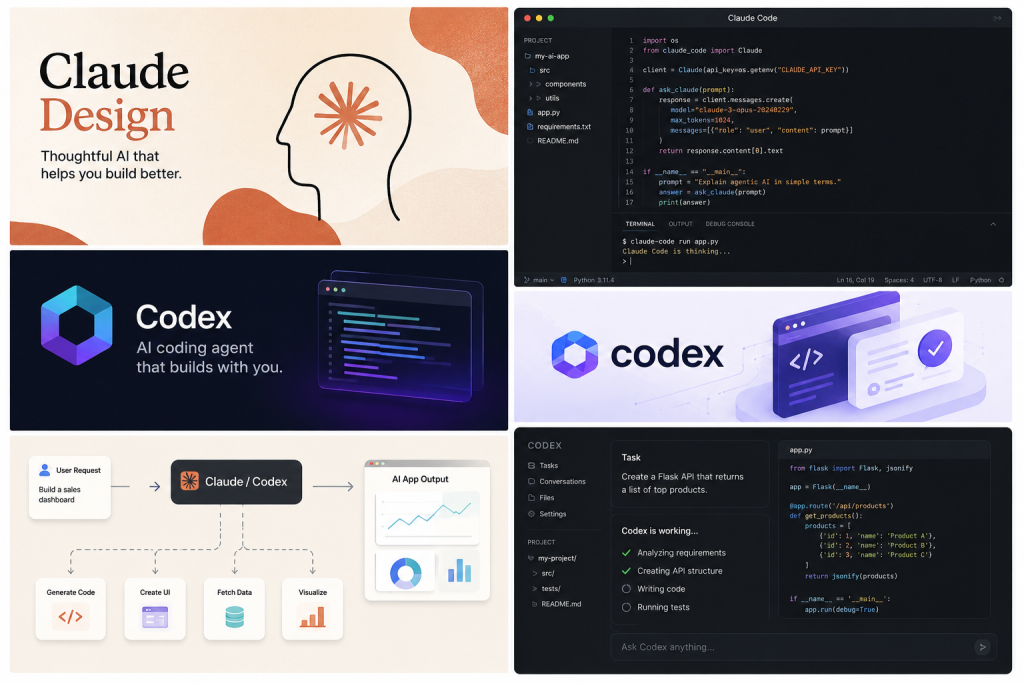
We compare the four that matter for most Singapore businesses today — ChatGPT for general drafting and reasoning, Google Gemini for research and the Google Workspace stack, Claude for long documents and careful analysis, and Microsoft 365 Copilot, which lives inside Word, Excel, Outlook, PowerPoint and Teams and can therefore work directly on your inbox, your spreadsheets and your meeting transcripts. Most organisations end up using two. We show you which two, and why.
- Understanding digitization and its applications in business
- Identify AI tools to improve business
In practice: you build a shortlist for your own department and score it against cost, data sensitivity, integration effort and staff readiness.
Section 3: Conduct Feasibility Analysis and Cost-Benefit Analysis
This is the section that separates a training course from a product demo. Enthusiasm is not a business case. Before any AI tool touches a live process, somebody has to answer the hard questions: what does it cost in licences, time and retraining? What does it save, measured honestly rather than hopefully? What is the failure mode, how likely is it, and what does it cost when it happens?
You will work through a structured feasibility assessment and a cost-benefit model you can reuse — and you will practise reaching the answer nobody wants to hear, which is that a particular use case is not yet worth doing. Knowing when to say no is why finance directors trust the people who say yes.
- Viability of using Generative AI tools
- Conducting feasibility analysis and weighing the costs and benefits of using Generative AI tools
In practice: you leave with a one-page business case for one AI initiative in your own organisation, in a form you can put in front of management.
Section 4: Implement AI Tools for Businesses
The final section is where the tools meet the work. This is the bulk of Day 2, and it is entirely hands-on.
Prompt engineering comes first, because nothing downstream works without it. A weak prompt — “write an email to the customer about the delay” — returns a weak email. A strong prompt specifies the role the AI should adopt, the task, the context it needs, the format of the answer, and the constraints it must respect. Same tool, same thirty seconds, completely different output. You will learn the structure, practise it, and learn to iterate: the first response is a draft, never the answer.

From there we apply the tools function by function, so that whatever your role, at least one hour of Day 2 is about your job specifically:
- Human Resources — job descriptions, structured interview questions, CV screening rubrics with auditable reasoning, exit-interview themes, policy drafts. Plus where AI screening creates fairness and legal risk, and why a human signs every hiring decision.
- Sales — prospect research before the call, proposals drafted from discovery-call notes, follow-up emails that do not read like templates, objection-handling scripts, one pitch rewritten for a CFO, a CTO and a founder.
- Marketing — campaign concepts, ad variants, landing-page copy, EDM subject lines, blog outlines built from real customer questions, and one webinar repurposed into a newsletter, eight social posts and a case study.
- Operations & Process Improvement — describe a broken process in plain English and have AI map it, name the bottleneck and propose fixes with trade-offs. Draft the SOP nobody has had time to write. Turn a policy document into a decision tree your team can follow.
- Customer Service — replies that acknowledge without admitting liability, six months of tickets distilled into the five problems worth fixing at source, technical explanations rewritten for non-technical customers.
- Finance & Admin — contract summaries with unusual clauses flagged for human review, variance narratives, board-paper drafts, memos.
- Building a culture of innovation
- Apply AI tools for content creation
- Apply AI tools for digital marketing
- Apply AI tools for business processes
- Apply AI tools for hard skills
In practice: you also learn what these tools get wrong. They fabricate facts, invent citations, inherit bias, and will cheerfully describe a Singapore employment regulation that does not exist. We cover the verification habits, the PDPA line on customer data, and the outputs that always need a second pair of eyes. Confidence without judgement is the fastest way to embarrass your company.
Master ChatGPT, Gemini, Copilot & New AI Tools for Enhanced Productivity
Generative AI now writes, analyses, summarises, codes — and creates images too.

Course Objectives
- Equip participants with a comprehensive understanding of AI’s role in digital transformation.
- Enable learners to identify, analyze, and implement the most suitable AI tools for their business needs.
- Foster a practical and strategic mindset for integrating AI technologies effectively and sustainably in business environments.
- Encourage innovation and continuous learning in the rapidly evolving field of AI.
What You Will Be Able To Do After Two Days
- Write prompts that work. Apply a repeatable five-part structure — Role, Task, Context, Format, Constraints — and iterate towards the answer you actually wanted, instead of accepting the first mediocre draft.
- Choose the right tool for the job. Know when to reach for ChatGPT, when Gemini is stronger, when Claude handles the long document better, and when Microsoft Copilot — sitting inside Word, Excel, Outlook, PowerPoint and Teams — beats all three because it can already see your files.
- Apply AI inside your own function. Job descriptions and interview rubrics in HR. Prospect research and proposal drafts in sales. Campaigns and content in marketing. SOPs and bottleneck analysis in operations. Complaint replies and knowledge-base articles in customer service.
- Judge whether it is worth it. Run a feasibility and cost-benefit analysis on a proposed AI use case and defend the conclusion — including the conclusion that you should not proceed.
- Spot a confidently wrong answer. These tools fabricate facts, invent citations and misstate regulations with total fluency. You will leave with the verification habits that make them safe to use on real company work, and a clear line on what must never be pasted into a public AI tool.
- Take home a prompt library. Tested prompts for your own role, built during the course, ready to use on Monday.
This course blends theoretical grounding with hands-on practice, preparing you to lead and execute AI-driven digital transformation initiatives — and to be the person in the room who knows what these tools genuinely do, and what they only appear to do.
No prior AI experience is needed. Day 1 starts from what generative AI is and how it produces its answers. You should be comfortable using a computer, email and a web browser, and able to read and write business English. These also help:
- Basic Understanding of Digital Technologies:
- Familiarity with fundamental digital concepts and technologies. This doesn’t require deep technical expertise but a general understanding of how digital tools are used in a business context.
- Business Acumen:
- An understanding of basic business principles and processes. This is important for comprehending how AI can be integrated into various business operations and strategies.
- Basic Computer Literacy:
- Proficiency in using computers and common software applications. While advanced programming skills are not necessary, comfort with technology is essential.
- AI and Machine Learning Concepts:
- Not required: Day 1 explains what AI and machine learning are, in plain English. This doesn’t require in-depth knowledge, and no prior awareness of these technologies is assumed.
- Openness to Learning New Technologies:
- A willingness and enthusiasm to learn about new technologies and their applications in business. This mindset is crucial for fully benefiting from the course.
- Problem-Solving Skills:
- Ability to think critically and solve problems. As the course will cover how AI can be used to address business challenges, these skills will be valuable.
- Communication Skills:
- Good verbal and written communication skills, as the course may involve group discussions, presentations, and collaborative projects.
The ideal target audience for a course on “Digital Transformation with AI Tools” is working adults in Singapore who want to use AI tools in their own job, including complete beginners. It suits:
- Business Leaders and Executives:
- CEOs, CTOs, CIOs, and other C-suite executives who are responsible for driving strategic decisions and implementing digital transformation initiatives in their organizations.
- Digital Transformation Consultants:
- Professionals who advise businesses on digital transformation strategies and need to stay abreast of the latest AI tools and technologies.
- Marketing Professionals:
- Digital Marketers, Content Creators, and Social Media Managers who can use AI tools for enhancing digital marketing strategies and content creation.
- Entrepreneurs and Startup Owners:
- Business owners who are looking to leverage AI tools to gain a competitive edge and innovate within their industries.
- HR Professionals:
- Human Resources Managers and Recruiters who can use AI tools for talent acquisition, employee engagement, and analyzing workforce data.
- Finance, Admin, Operations and Customer Service Staff:
- Finance, admin, operations and customer service staff who spend hours on emails, reports, summaries and routine documents.
- Managers and Team Leads:
- Managers and team leads who must decide which AI tools their team should use, and whether a use case is worth the cost.
By targeting this diverse audience, the course can address a wide range of interests and needs, ensuring relevance and applicability across various industries and professional roles. The course will be particularly beneficial for those who are in positions to influence or implement digital strategies and innovations in their organizations.
Post-Course Support
- We provide free consultation related to the subject matter after the course.
- Please email your queries to training@intellisoft.com.sg and we will forward your queries to the subject matter experts.
Venue:
All courses are conducted at Intellisoft Training Rooms at 190 Middle Road, 10-08 Fortune Centre, Singapore 188979.
Short walk from Bencoolen MRT, Bugis, Rochor, Bras Basah MRT stations. The venue is disabled-friendly. For directions, click Contact Us.