Day One: Data Visualization Fundamentals With Microsoft Power BI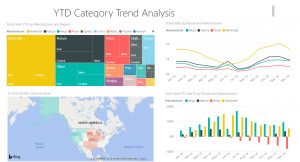
Introduction
- When and Why to Use Power BI
- Tour of the Power BI Environment
Loading Data from Hundreds of Data Sources
- Various Methods of Data Loading with Power Query
- Tradeoffs in Loading Techniques
- Best Practices of Loading & Cleaning Data in Power Query, a built-in tool within Microsoft Power BI.
- Create a Data Model of Multiple Tables within Power BI
Introduction to Formulas and DAX using Microsoft Power BI
- Named reference syntax
- Similarities to traditional Excel
- Measures (Calc Fields) vs. Calc Columns
- COUNTROWS() and DISTINCTCOUNT()
- Best practices of using Aggregator & Iterator Functions in Power BI Measure creation
Working with Multiple Tables using Power BI
- Relationships: the End of VLOOKUP?
- Data Tables vs. Lookup Tables
- Multiple Data tables in a single model
- Troubleshooting your “relationship problems”
- Exercises to cement your learning
The Magic of DAX Measures in Microsoft Power BI
- The CALCULATE() function.
- ALL(), percentage of totals, and “cancelling slicers.
- Introduction to Time Intelligence: Date/Calendar Tables
- Running totals – Year to Date,
- Change versus Prior Month/Year Etc.
What-if Analysis using Disconnected Tables and Slicers
Day Two: Advanced Data Visualization With Power BI 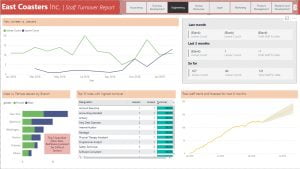
Recap and More DAX
- Recap of previous day
- Theory of the Vertipaq engine
- Filter() , Custom Calendars.
DAX Patterns for common problems using Power BI
- Counting things that didn’t happen (eg customers without purchases)
- Custom time intelligence patterns
Power Query
- When to use it and why
- Built-in transformations
- The “M” language
- Using Power Query to solve real-world problems.
Performance
- How to Keep Your Files Small and Your Calculations Fast
- The theory behind compression Sharing and Refreshing Workbooks
- Different Web Hosting options (SharePoint and Power BI)
- Options to refresh workbooks easily
- Creating Advanced Reports and Dashboards with Power BI
Advanced Power BI Visualizations
- A detailed review of what is different about Power BI vs Excel.
- Learn to think differently and use the visualizations available.
Publishing Dashboards to Power BI Services
- A detailed review of the cloud offering, including sharing, Q&A, Analyze in Excel, and publishing Dashboards to Mobile Apps.
- Using Power BI Mobile
Microsoft’s Cube Formulas: Power BI Data in Excel
General Q&A
93% of 1,949 Power BI learners rated this course 4 or 5 out of 5 (post-course evaluations since 2023).
Use this class to learn Power BI and get your entire team to master Power BI data visualizations, DAX, Power Query & online report publishing.
Intellisoft runs Power BI training courses in Singapore that end with a WSQ certificate. If you are working towards a Microsoft Power BI certification (PL-300), the course covers its core skills, and you book the exam separately with Microsoft. This Power BI SkillsFuture course in Singapore covers essential skills such as data visualization, dashboard creation, and data analysis.
Participants can expect hands-on training and practical exercises to enhance their understanding of Power BI tools and techniques. Enrol in this WSQ-funded, SkillsFuture-claimable Power BI course and you will build and publish a working Power BI dashboard in two days.
The main objective of this WSQ Funded SkillsFuture Course on Power BI is to learn how to analyze and visualize data using the Microsoft Power BI Tool easily.
Data Analytics and Visualization With Power BI is a hands-on data analytics course on Microsoft’s BI tools: Power Query, the data model, DAX measures and the Power BI Service. You learn to analyse, visualise and share business reports yourself.
- Understand Power Query to load data from any source and cleanse it
- Learn to Create DAX Measures, and how to apply them to your job.
- Achieve better and faster results than with existing Microsoft tools.
- Produce valuable KPI metrics for your business that never existed before.
- Learn practical tips to solve common reporting problems.
Logistics
This 2 Day Power BI Data Analytics and Data Visualization Training Course will be held in Singapore. Tea/Coffee, Light Snacks are provided in this training at Fortune Centre, 190 Middle Road. We are located near Rochor, Bencoolen, Bras Basah & Bugis MRT Stations. Classes run from 8:45 AM to 5:45 PM on both days.
UTAP Funding: NTUC Members can utilize UTAP to offset 50% of the remaining fees and learn Power BI at Intellisoft Systems in Singapore*.
Learn Power BI at Intellisoft, Founded by Microsoft Certified Trainer Vinai Prakash
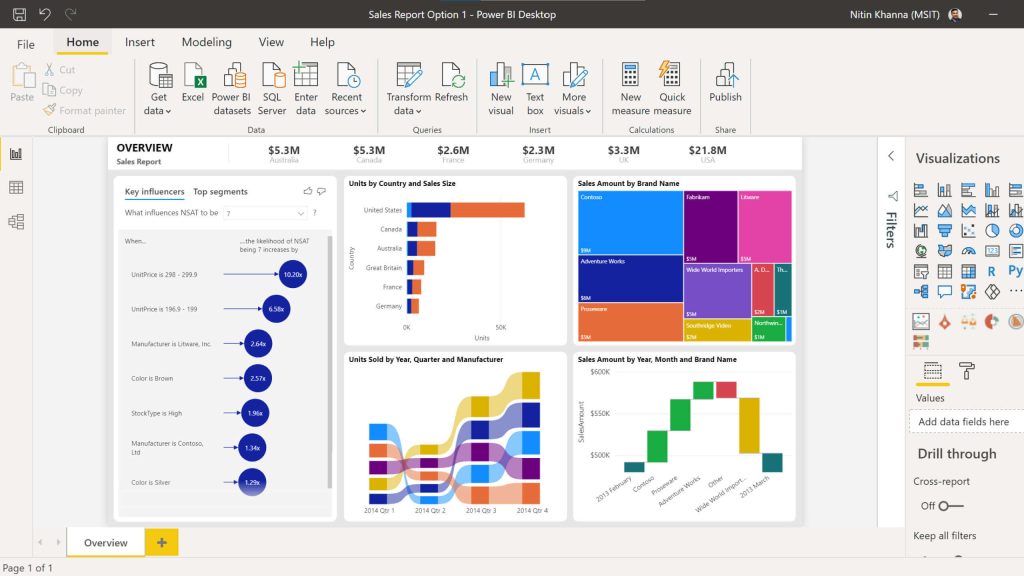
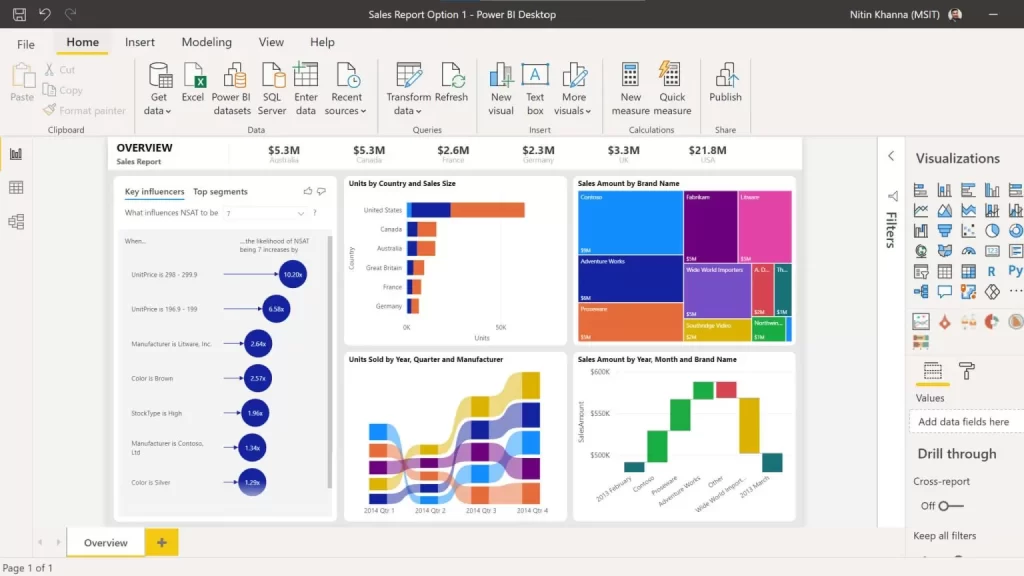
Learn Power BI and visualize data to gain insights into your data immediately. Present data in charts and dashboards over the Power BI service, offering auto-refresh on a daily or hourly basis.
Corporate Power BI Training in Singapore
Corporate training is available for company groups, at your premises or ours. Contact us for a
tailored proposal. We have conducted several Corporate Training Workshops on Microsoft Power BI at MSD, MasterCard, Rolls Royce, NUH, GSK, Shell, NIIT, Manulife, SIA, Sony, SP Power, Samsung, Vodafone and several other government and private organizations in Singapore, Malaysia, Indonesia, Australia, Egypt, Zimbabwe etc.
We also run public and corporate classes in Python, Tableau, SQL, Advanced Excel, PowerPoint, Power Apps and Power Automate.
It would be good if you have Basic knowledge of Excel, and can write simple formulas like SUM, IF, Nested IF, and:
- Light usage of Excel PivotTables (or similar data analysis tools)
- Familiarity with Excel functions like SUMIF and VLOOKUP are a plus
- A passion for acquiring Data Analysis & Data Visualization Superpowers
Note: Anyone with Database, BI, Programming, or similar experience is quite qualified to take this course, even if lacking in good Excel experience.
The class uses Power BI Desktop. The Power BI Desktop software is available for download from the Microsoft website for free. We will provide you with a copy of the application for use in the class.
You can opt to use the Intellisoft provided Laptop during classroom sessions. It comes with the latest version of Power BI Desktop installed, so you do not need to bring your own.
Power BI Training Singapore: SkillsFuture, WSQ and UTAP Funding
This Power BI SkillsFuture course is WSQ funded. Singapore Citizens aged 25 and above can use SkillsFuture Credit to pay the nett fee, and NTUC members can claim UTAP on top of up to 70% WSQ funding.
Public runs are taught by Intellisoft’s Power BI trainers. Intellisoft trainers are rated 4.7/5 for knowledge (8,556 post-course evaluations since 2023). WhatsApp us to ask who is teaching the date you want.
Additionally, find out how to claim UTAP to offset your course fees on top of up to 70% WSQ Funding and SkillsFuture. Join now and enhance your data visualization skills!
You do not need any Power BI experience to join.
This Microsoft Power BI course in Singapore starts from opening Power BI Desktop for the first time. This Data Visualization With Power BI Training is suitable for beginners. It is better if you have some decent experience in using Excel on a day to day basis.
- Intensive users of Excel, especially those responsible for reporting and analysis.
- This training is useful for Bankers, Finance, and Accounting Executives who deal with a large amount of data and can change it into actionable form.
- Data analysts can use it to derive complex performance analyses for actions to be taken.
- Business users also use it to observe changes in data patterns to understand the performance of their investments in marketing, sales, and advertising.
- Organizations looking to leverage
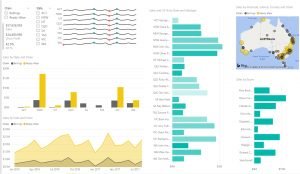
Microsoft’s Power Pivot and Power BI tools.
- Business Intelligence and Database professionals looking to increase their professional agility and dramatically expand their capabilities.
The Excel Data Analysis training complements this course, if you use Excel for data analysis & Dashboard creation.
Post-Course Support
- We provide free consultation related to the subject matter after the course.
- Please email your queries to training@intellisoft.com.sg and we will forward your queries to the subject matter experts.
Venue:
All courses are conducted at Intellisoft Training Rooms at 190 Middle Road, 10-08 Fortune Centre, Singapore 188979.
Short walk from Bencoolen MRT, Bugis, Rochor, Bras Basah MRT stations. The venue is disabled-friendly. For directions, click Contact Us.
























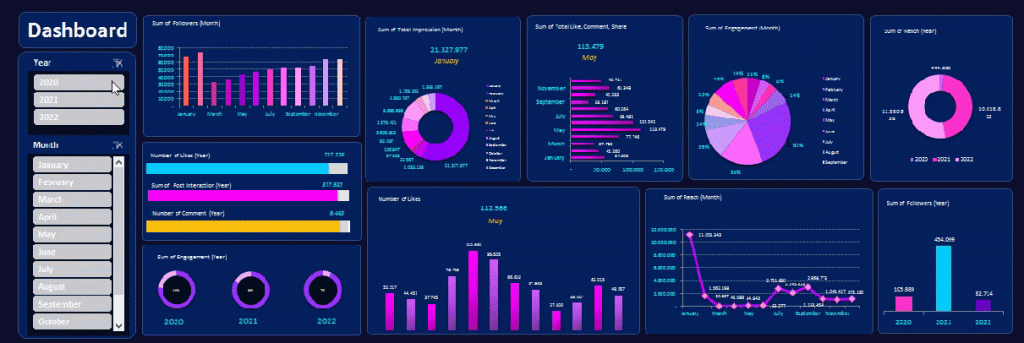

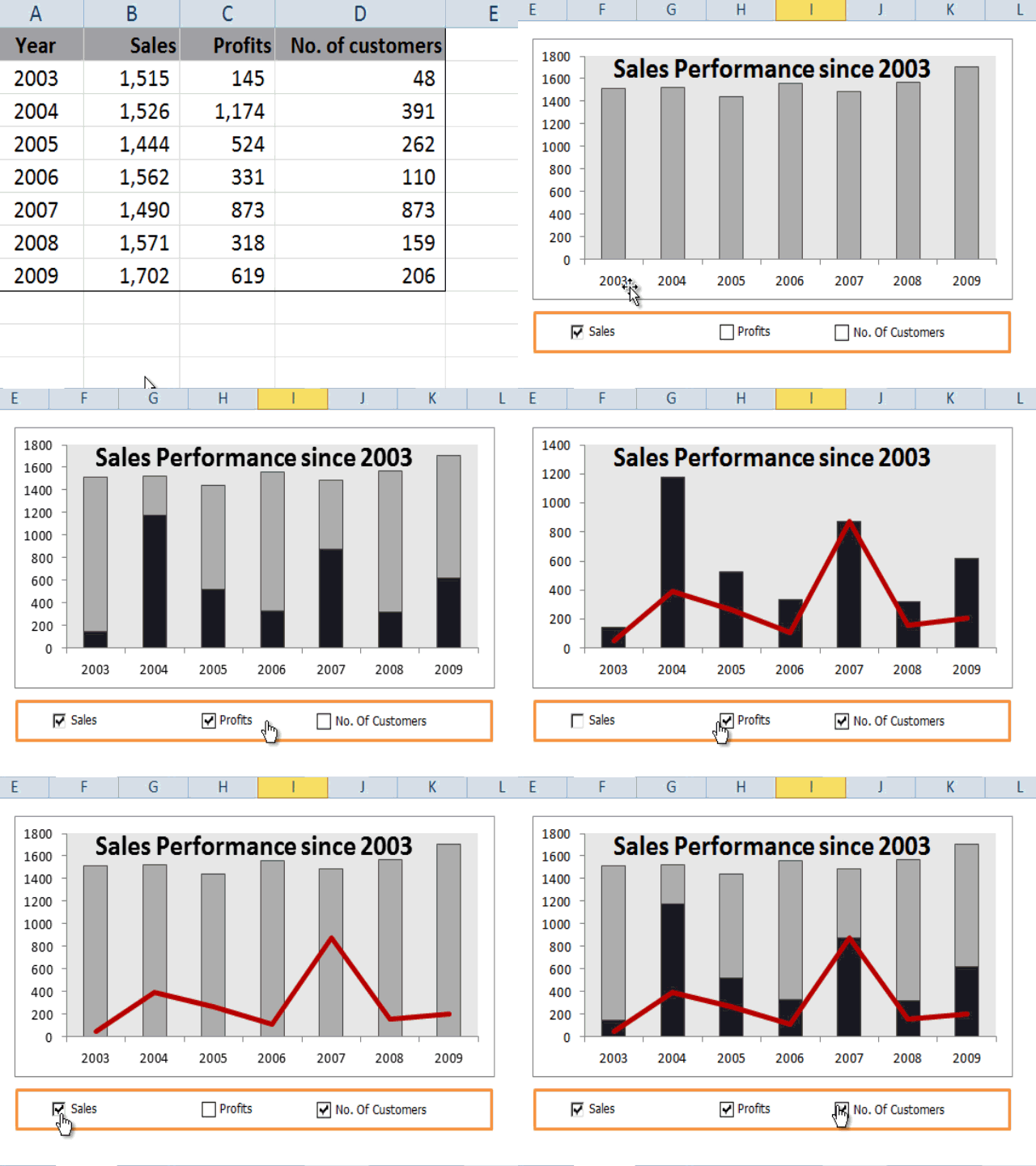


 Most data analysts, managers, decision-makers, and even end users typically struggle with report creation as they lack knowledge of features such as data analysis, data cleanup, advanced pivot tables techniques, and visualization techniques within Excel.